The Japanese tradition
of the ofuro.

The Ofuro
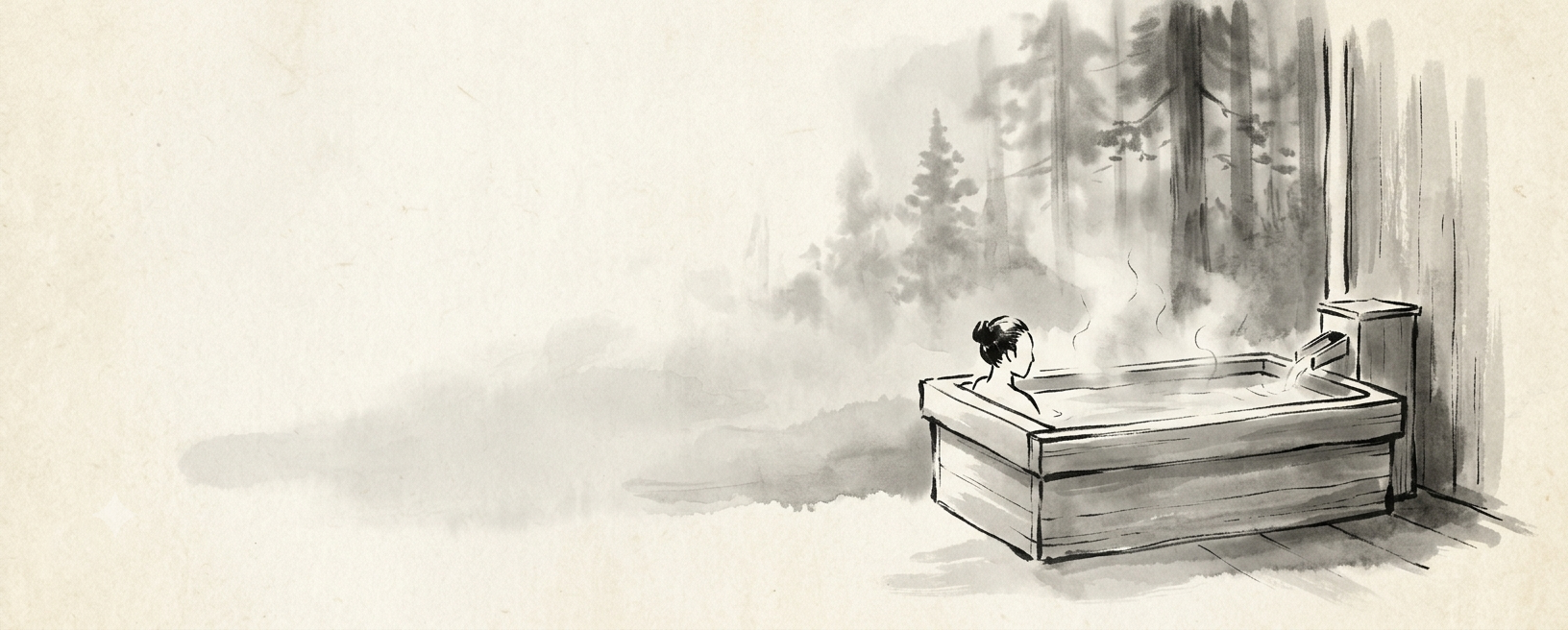
In Japanese bathing culture, washing and soaking are separate activities. The body is washed before entering the bath, leaving the water clean and the time spent in it free from any practical purpose.
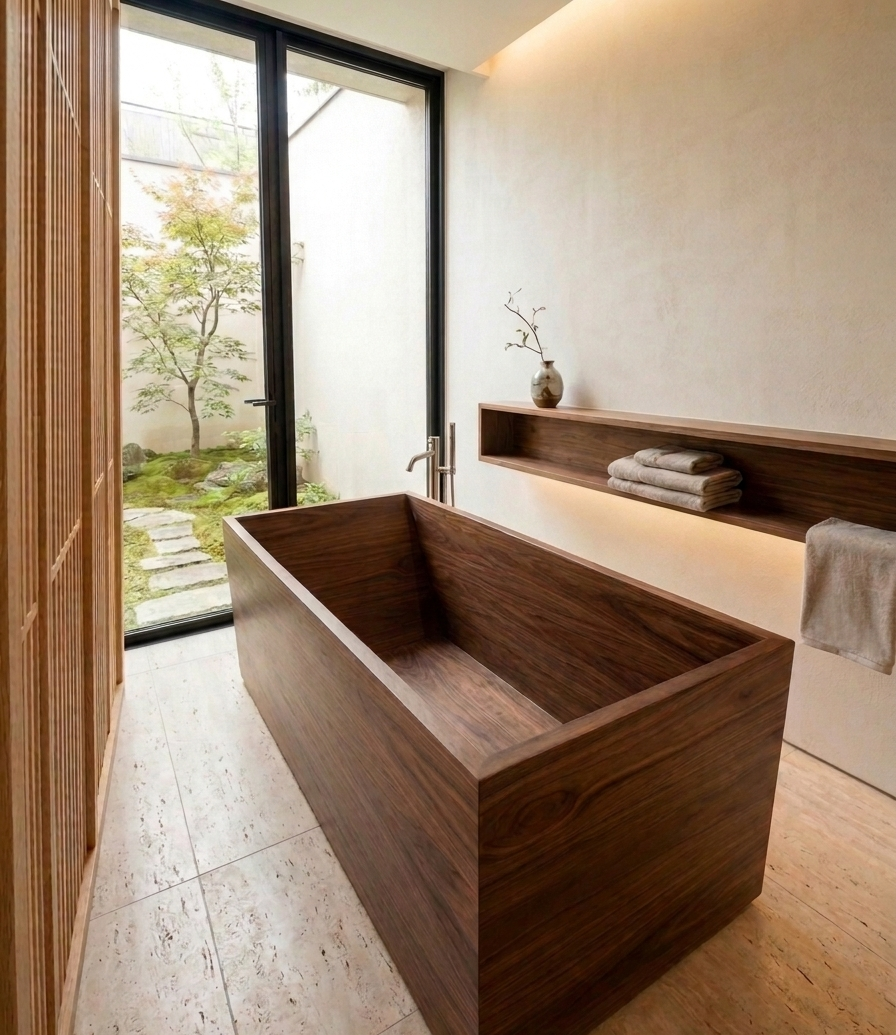
The ofuro developed around this distinction. It is deeper and more upright than a Western bathtub, allowing the body to remain immersed while seated. Traditionally made from woods such as hinoki, it combines the warmth of the water with the warmth and scent of timber.
Wood and water.

The relationship between wood, heat and bathing is not unique to Japan. It can also be found in the Finnish sauna, the Russian banya and older European bathing traditions.
During the twentieth century, wood largely disappeared from the bathroom as enamelled metal, ceramic and later acrylic became standard.
A wooden bath belongs to another understanding of the room: one in which the material is expected to remain visible, tactile and capable of changing gradually with use.
Today
Our place in this history.
OFURO XXI is a European interpretation of the ofuro, informed by more than fifteen years of experience with wooden bathtubs and washbasins.
What we retain from the ofuro is its essential idea: a bath should be deep, warm and suited to quiet immersion, with proportions shaped around the seated body.
What we bring is contemporary European construction and finishing developed for wooden products used in modern bathrooms.
The result is our interpretation of the ofuro, made for the way homes are built and used today.